

Thailand’s Bank of Thailand (BOT), in coordination with the Thai Securities and Exchange Commission (SEC), has initiated a sweeping crackdown focused on USDT stablecoin transactions, large cash movements, and gold trading activities. This marks the country’s most aggressive regulatory action against cryptocurrency-linked money laundering to date.
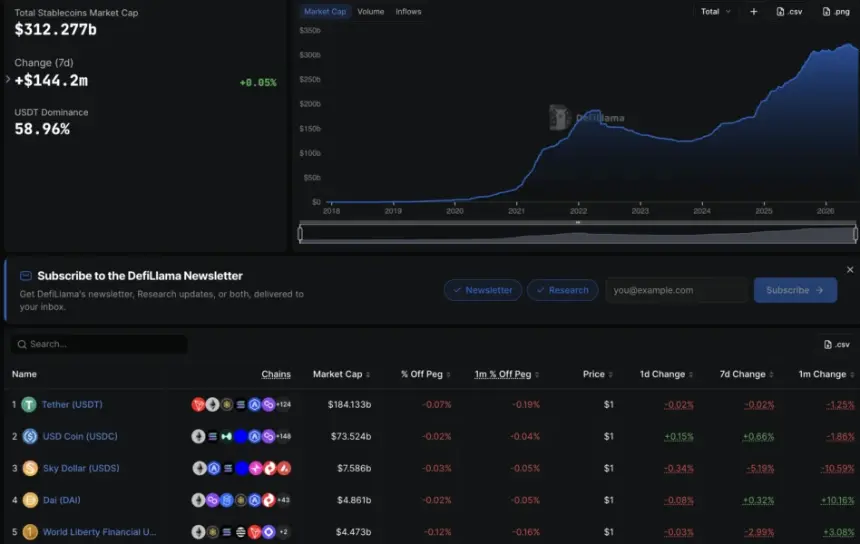
The move comes in response to an estimated $3.4 billion in scam-related losses in 2025 alone—much of it tied to Chinese-affiliated fraud operations that exploit stablecoins for cross-border illicit finance. USDT, with its $189 billion market capitalization and status as the third-largest digital asset after Bitcoin and Ethereum, has become a primary target due to its stability and rapid settlement capabilities.
Under the new enforcement regime, commercial banks, currency exchanges, and even gold shops face heightened compliance obligations. Cash deposits exceeding 5 million Thai baht (approximately $150,000) now require full source-of-funds declarations, while unexplained exchanges of large-denomination banknotes are being flagged for investigation.
Bitkub, Thailand’s largest cryptocurrency exchange handling roughly $26 million in daily volume—40% of which involves the USDT/THB trading pair—is under particular scrutiny. Although crypto trading remains legal in Thailand, using digital assets like USDT or USDC as payment is strictly prohibited, despite their regulatory approval for trading purposes.
Authorities have already frozen over 10,000 accounts suspected of involvement in money laundering, echoing a broader 2025 operation that impacted 3 million accounts, many belonging to legitimate users. Critics warn of potential overreach, raising concerns about financial inclusion and user rights.
Globally, similar trends are emerging: South Korea has tightened withdrawal rules on exchanges, France now mandates reporting for self-hosted wallets, and Brazil’s Operation Veil of Maya underscores international efforts to curb crypto-enabled financial crime.
For retail traders, the crackdown translates into stricter KYC procedures, enhanced transaction monitoring, and possible account restrictions based on on-chain behavior flagged during audits. Tether has reportedly cooperated with law enforcement by freezing suspect USDT balances, and the BOT may soon implement permanent wallet blacklists derived from audit findings.
The Thai SEC is also considering expanding shareholder disclosure rules to expose hidden backers of crypto businesses—a measure aimed at closing sponsorship loopholes exploited by illicit actors.
While the campaign reflects a long-term strategy, as emphasized by BOT Governor Vitai Ratanakorn, its ultimate success hinges not just on freezing assets but on securing prosecutions that dismantle gray-market networks rather than merely displacing them to less-regulated jurisdictions.