

Bitcoin (BTC) is on track for its strongest July performance since 2022, gaining nearly 10% so far this month. However, analysts are warning that the rally may be short-lived, drawing parallels to the bear market dynamics observed two years ago.
Data from CoinGlass shows BTC up 9.5% in July, marking a four-year high for monthly gains during this period. In 2022, Bitcoin also posted a robust July, rising almost 17% after a steep 38% drop in June. Yet that strength proved misleading—BTC tumbled roughly 14% in August and fell another 3% in September, reinforcing bearish sentiment.
Market participants remain cautious despite the current momentum. Trader Daan Crypto Trades noted on X that while BTC’s July performance aligns with historical averages, Q3 remains Bitcoin’s weakest quarter on average, with just 6% gains even when including bull markets. “This has to do a lot with slow markets, low liquidity and volumes during the Summer time,” he explained.
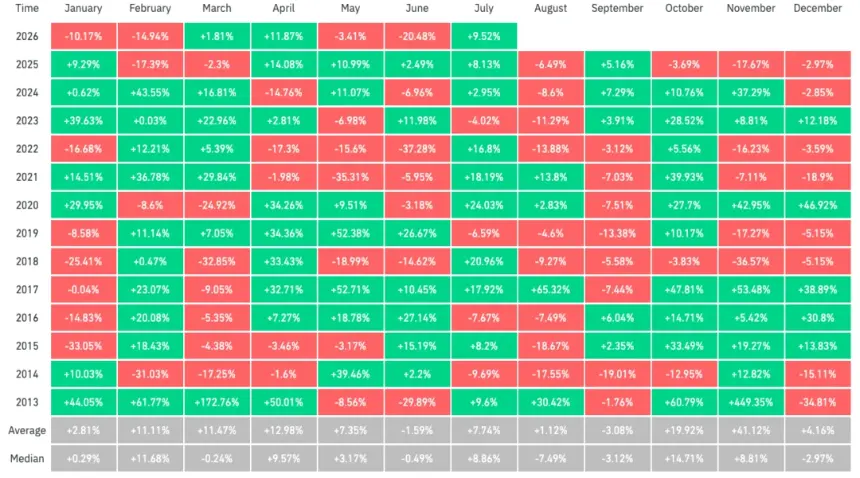
BTC monthly returns (screenshot). Source: CoinGlass
Analyst Rekt Capital echoed these seasonal concerns, highlighting that BTC’s price action in 2024 closely mirrors previous bear-market cycles. “If history repeats, things are likely going to pick up for Bitcoin and its Summer relief rally in the second half of July,” he wrote on X. However, he anticipates August erasing July’s gains ahead of a potential bear-market bottom in Q4.
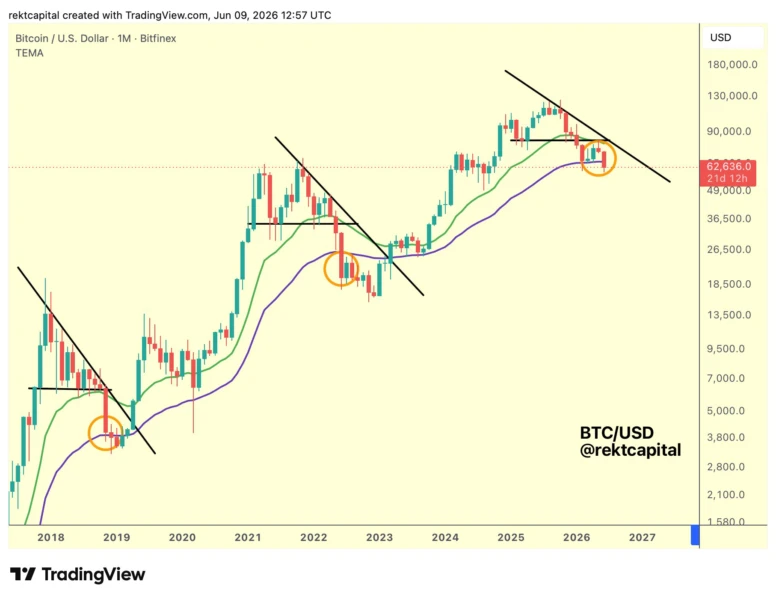
BTC one-month chart. Source: Rekt Capital/X
Amid the uncertainty, some traders are targeting $70,000 as a potential peak for the July bounce. Peter Anthony, creator of the House of Crypto YouTube channel, called it an “interesting few days ahead” based on daily chart analysis. Another trader identified the $67,000–$73,000 range as a zone for short entries, forecasting a “bullish July, then bearish August until Q4.”
Daan Crypto Trades concluded: “Q4 is when the real volatility takes place for BTC (both directions). Will this year be the same?”
Earlier reports from Cointelegraph highlighted that several on-chain indicators are now flashing signals consistent with a bear-market bottom—the first such signs in four years. Nevertheless, overall market demand has shown only partial recovery, leaving room for continued caution among investors.